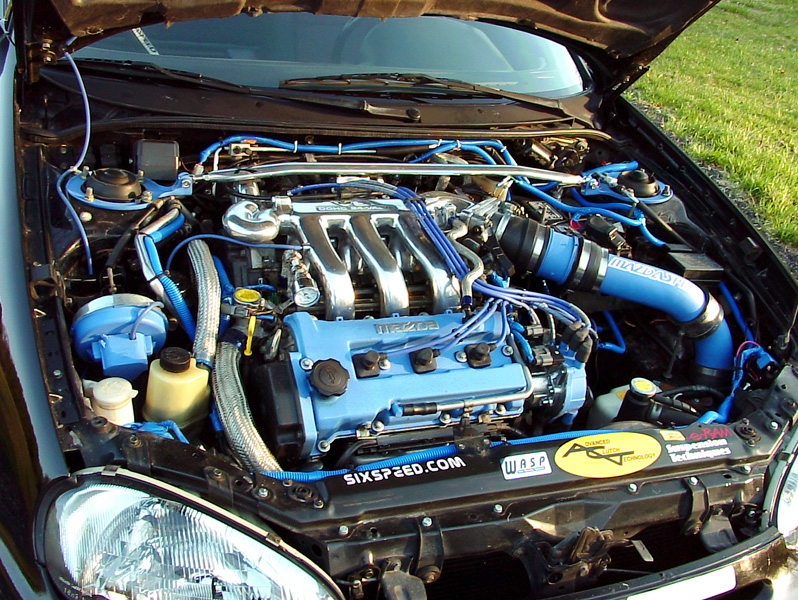
 The
MX-3's engine bay is not known for its roominess. In actuality, it is a small
miracle that Mazda was able to get the 1.8 liter V6 under the hood at all. For
anyone that is familiar with Honda's capacious motor compartments and
relatively dinky power plants, the MX-3 is a real eye-opener. One can
practically place their feet on the ground whilst standing in the engine
compartment of a Civic. You can hardly get an outstretched hand between any
two components in the MX-3. Where would the supercharger go?
The
MX-3's engine bay is not known for its roominess. In actuality, it is a small
miracle that Mazda was able to get the 1.8 liter V6 under the hood at all. For
anyone that is familiar with Honda's capacious motor compartments and
relatively dinky power plants, the MX-3 is a real eye-opener. One can
practically place their feet on the ground whilst standing in the engine
compartment of a Civic. You can hardly get an outstretched hand between any
two components in the MX-3. Where would the supercharger go? 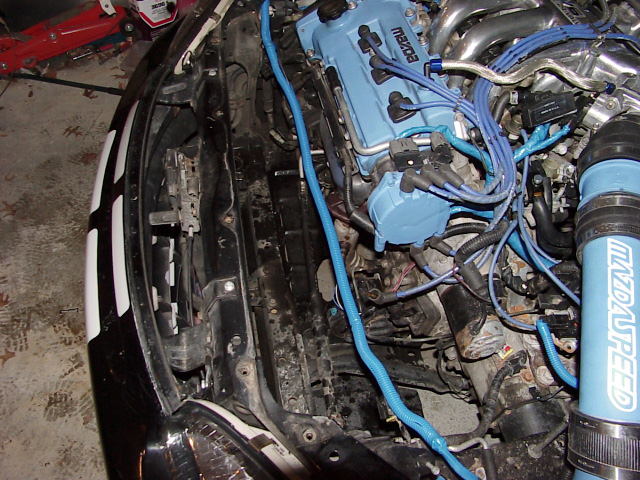
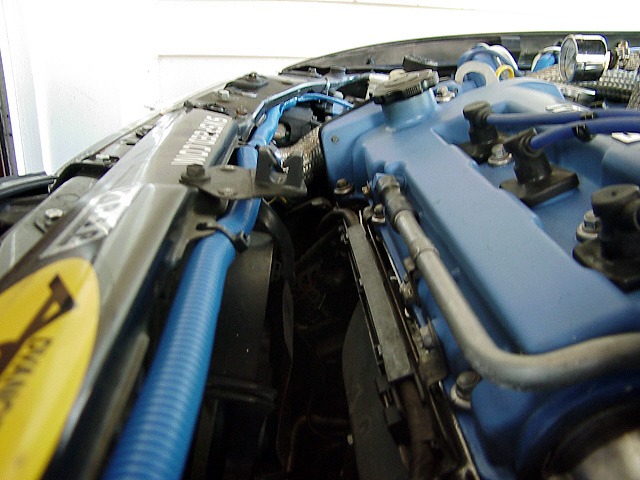 This is an important question.
The Vortech V5 itself is roughly
the size of the airbox. I had already removed the airbox and installed a
custom made intake tube. The drive apparatus needs enough clearance to pass
between the left exhaust manifold and the radiator fans without making contact
as the engine moves on its mounts. This would require moving the radiator and
utilizing smaller cooling fans. Lastly, the compressed 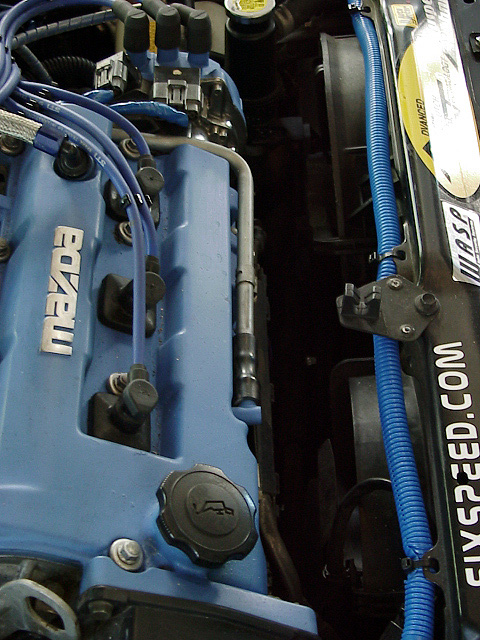 intake charge has to make the ten inch
journey to
intake charge has to make the ten inch
journey to 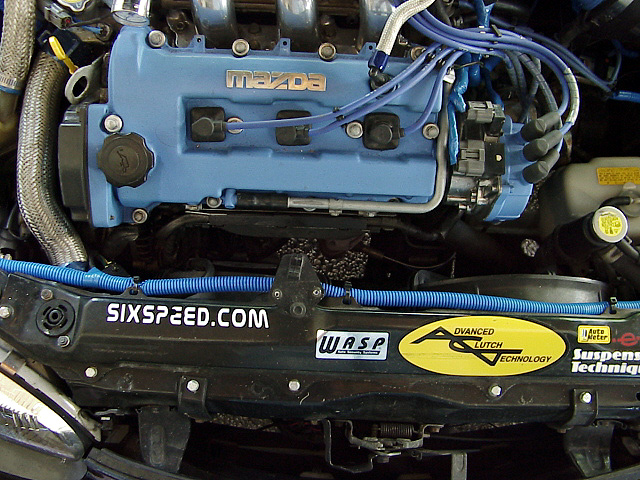 the throttle body through a blow-off
valve AND the stock VAF, all the while making a 130º turn just short of the
battery.
the throttle body through a blow-off
valve AND the stock VAF, all the while making a 130º turn just short of the
battery.
This will ultimately become even more challenging when I attempt to place an intercooler of some sort in the air path.
Beyond making it fit is the ultimate goal of making it work. More than just shoe-horning the apparatus into the car, I had to be certain that it would work, work well, and still have the car be the dependable, drivable machine that it had been up until this point. The fuel delivery and over-all engine management had to be addressed as well as careful consideration and upgrading of all the peripheral components and systems.
I outline (and often detail) these criteria, goals and processes in the pages that follow.